10 August 2026
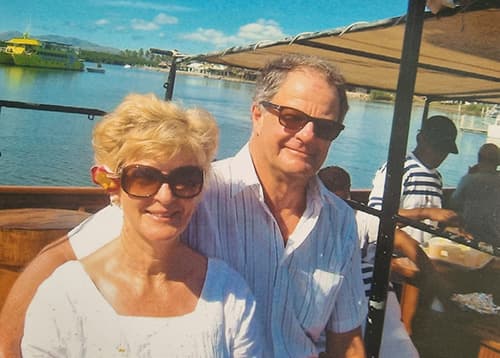
Marguerite Sakey knows what the end of life looks like. As a retired hospice nurse, who trained in the UK with hospice founder Dame Cicely Saunders, she has supported hundreds of people during this incredibly profound time.
But it was caring for her husband, John, that has, naturally, left the biggest imprint on her.
John died in a residential care facility in September 2025, aged 80. Surrounded by those he loved, and locking eyes one last time with his wife of 53 years, he couldn’t have had a more peaceful death, Marguerite says.
But if she wasn’t a retired hospice nurse, who knew to engage the support of Harbour Hospice, would it have been peaceful?, Marguerite questions.
John lived with Alzheimer's and heart disease and represented a growing number of people in our community with complex, non-cancer conditions. Their needs are longer-term and harder to predict than the shorter cancer trajectories hospice care was originally built around.
Today more than a third of the people we care for have non-cancer conditions like John's, and over the next decade non-cancer conditions will drive almost all the growth in need across our region. Yet many people with conditions like John's never reach hospice care at all.
Marguerite’s professional background meant she knew Harbour Hospice wasn’t purpose-built for someone with Alzheimer’s, but she also knew that, more than anything, the couple needed specialist end-of-life support.
“We needed that comfort, that specialist knowledge, and the reassurance that if I got into trouble hospice would be there.”
So, she reached out to us, and we responded, setting up monthly meetings to monitor John’s trajectory, connecting the couple with local district nurses who regularly visited, and supplying the couple with equipment to assist with John’s mobility. We helped with tasks that were becoming physically difficult for Marguerite, like showering John. And when Marguerite needed a break, we took John into our inpatient unit for symptom management and respite care.
John was prone to wander, and our inpatient unit wasn’t designed to safely accommodate patients who wander.
But Marguerite still felt she and John benefitted hugely from his respite stays. “It was magic. You don’t realise how exhausted you are until you’re off your ‘watch’.”
Eventually it became too much for Marguerite to continue to have John at home, and she moved him into a residential care facility. We continued providing support, advocating for John and Marguerite and working alongside care facility staff.
Marguerite feels that more support and education, across the board, is needed for aged residential care facility staff. “While aged care facilities can provide end-of-life care, they don’t specialise in palliative care. Family members would benefit hugely from this education too.
“Still, in the end, with hospice support John died very peacefully, with all the family there, holding him in our arms. And in that moment I wasn’t his nurse; I was just his wife, which was very important to me. “The memory of a good death stays with a family forever, Dame Cicely Saunders always said. But what would have happened if I wasn’t a retired hospice nurse, and if I hadn’t had Hospice right there on my shoulder with the appropriate medication, good support, the right advocacy?”
The RIGHT CARE, at the RIGHT TIME, in the RIGHT PLACE
John and Marguerite's story highlights how hospice care can really make a difference, but it also highlights some aspects of the changing needs of our community. To be able to meet those needs, we must adapt our model of care. Families need us to support them through longer, more complex journeys. We need to reach people earlier and be flexible enough to step in and out as needs change. We’ve started the work. We’re at the beginning of a carefully considered and deliberate journey to evolve our services. But just as we always have, we need the support of our community to achieve this.
More families are facing longer, complex, end-of-life journeys. Your support helps us evolve to meet this need. Give today to help us provide specialist care in the right place, at the right time.